How to increase sales conversion rate: a practical guide for 2026

Alex Zlotko
CEO at Forecastio


How to increase a sales conversion rate? The most effective way is to improve the quality of your qualified leads, remove bottlenecks in your sales pipeline, and help sales reps focus on the opportunities most likely to close. Small improvements at every stage of the sales funnel can significantly increase your overall conversion rate and win rate.
According to ICONIQ's 2026 State of Go-to-Market report, free trial and POC paths now convert at roughly 50%, while traditional SQL and demo paths convert at 30-40%. This shows a clear challenge for B2B SaaS companies: generating demos is not enough anymore. Sales teams need to convert interest into paying customers more efficiently.
What Affects Sales Conversion Rate?
Your sales conversion rate is influenced by every stage of your sales funnel. If qualified leads stop moving through the sales pipeline or take too long to close, your conversion rate will decline.
The most common factors that affect sales conversion rate include:
Lead quality. If your ICP is not well defined, your team will spend time on prospects who are unlikely to buy.
Sales pipeline management. Deals that become stalled, inactive, or remain too long in the same stage are less likely to close.
Sales cycle length. The longer it takes to close B2B deals, the higher the chance that potential buyers will lose interest or choose a competitor.
Sales process execution. Poor follow-up, weak discovery, or a lack of next steps can reduce the win rate, even when working with qualified opportunities.
Pipeline visibility. Without clear insights into which deals have the highest probability of closing and which require immediate attention, sales leaders and sales reps often prioritize the wrong opportunities, reducing the overall conversion rate.
Understanding which of these factors has the biggest impact on your business is the first step toward improving your sales conversion rate.
How to Increase Sales Conversion Rate
Improving your sales conversion rate requires both better deal execution and better sales pipeline management. Some of the following recommendations help sales reps win more deals, while others help sales leaders optimize the entire sales process.
1. Properly Qualify Leads
The first step is to qualify leads thoroughly. Your sales pipeline should contain only opportunities with a realistic chance of becoming customers. Filling your pipeline with low-quality deals creates inaccurate forecasts, wastes time, and lowers your overall win rate.
2. Conduct Deep Discovery
The better you understand your customer's business, goals, and challenges, the easier it becomes to position your solution. Ask questions, identify pain points, understand the buying process, and confirm that your solution is the right fit before moving forward.
3. Prepare for Every Demo
A demo should solve a customer's problem not showcase every product feature. Tailor every presentation to the customer's industry, use case, and pain points. Focus on the outcomes they want to achieve instead of turning the meeting into a product tour.
4. Develop a Mutual Action Plan
After a successful demo, define clear next steps together with your customer. A Mutual Action Plan keeps both sides aligned, establishes accountability, and reduces the risk of deals losing momentum during the buying process.
5. Start Multithreading from Day One
Don't rely on a single champion. In larger B2B deals, multiple stakeholders influence the final decision. Build relationships with decision-makers, end users, finance, procurement, and executives as early as possible.
6. Follow Up Quickly and With Quality
Fast follow-up shows professionalism and keeps the conversation moving. Every follow-up should add value by answering questions, sharing relevant resources, or confirming the next steps instead of simply asking whether there are any updates.
7. Know Your Competition
Understand why customers choose your competitors and why they choose you. Being prepared to address competitive objections helps sales reps position your solution more effectively and respond confidently during the sales process.
8. Prioritize Your Deals Every Day
Not every opportunity deserves the same attention. Review your pipeline daily and focus on the deals with the highest likelihood of closing or those requiring immediate action. Prioritizing the right opportunities improves productivity and helps increase your close rate.
9. Identify Bottlenecks in Your Sales Process
Analyze your sales pipeline stages to understand where deals slow down or are most frequently lost. Once you identify these bottlenecks, adjust your sales process, improve coaching, or remove unnecessary friction.
10. Keep Track of Deal Risk
Successful teams don't wait until the end of the quarter to discover problems. Continuously monitor deals for warning signs such as inactivity, slipping close dates, missing stakeholders, or stalled progress, and take corrective action early.
11. Understand Win/Loss Patterns
Review your historical B2B deals to understand why opportunities were won or lost. Identifying recurring patterns helps refine your ICP, improve qualification, strengthen messaging, and make better strategic decisions.
12. Rely on Data, Not Intuition
The best sales organizations make decisions based on data instead of assumptions. Track conversion rates, pipeline performance, deal risks, and historical trends to continuously improve both individual performance and overall sales operations.
Real Example: How We Improved Our Trial Process
When we launched Forecastio, our sales pipeline showed a recurring pattern. During the free trial, our main contact was usually the Head of RevOps. While they actively used the platform, the final purchasing decision was typically made by the CRO. In several cases, the CRO had little visibility into the progress of the pilot until the very end.
To solve this, we redesigned our trial process. Instead of waiting until the pilot was over, we introduced two mandatory executive meetings: one during the second week to present early results using the customer's own data, and another at the end of the pilot to review business outcomes, implementation progress, and next steps.
We also started sending regular progress updates to the CRO, summarizing trial results, completed customizations, and upcoming milestones. This kept executive stakeholders engaged throughout the evaluation instead of only at the final approval stage.
The result was a better-informed buying committee, higher executive engagement, and a smoother buying process. It also reinforced one of the key principles discussed above: multithreading and stakeholder engagement should start early, not just before the deal closes.
How Forecastio Can Help Increase Sales Conversion Rate
Improving your sales conversion rate requires more than intuition. Sales teams need visibility into their sales pipeline, deal risks, and historical performance to make better decisions. Forecastio helps automate many of these activities.
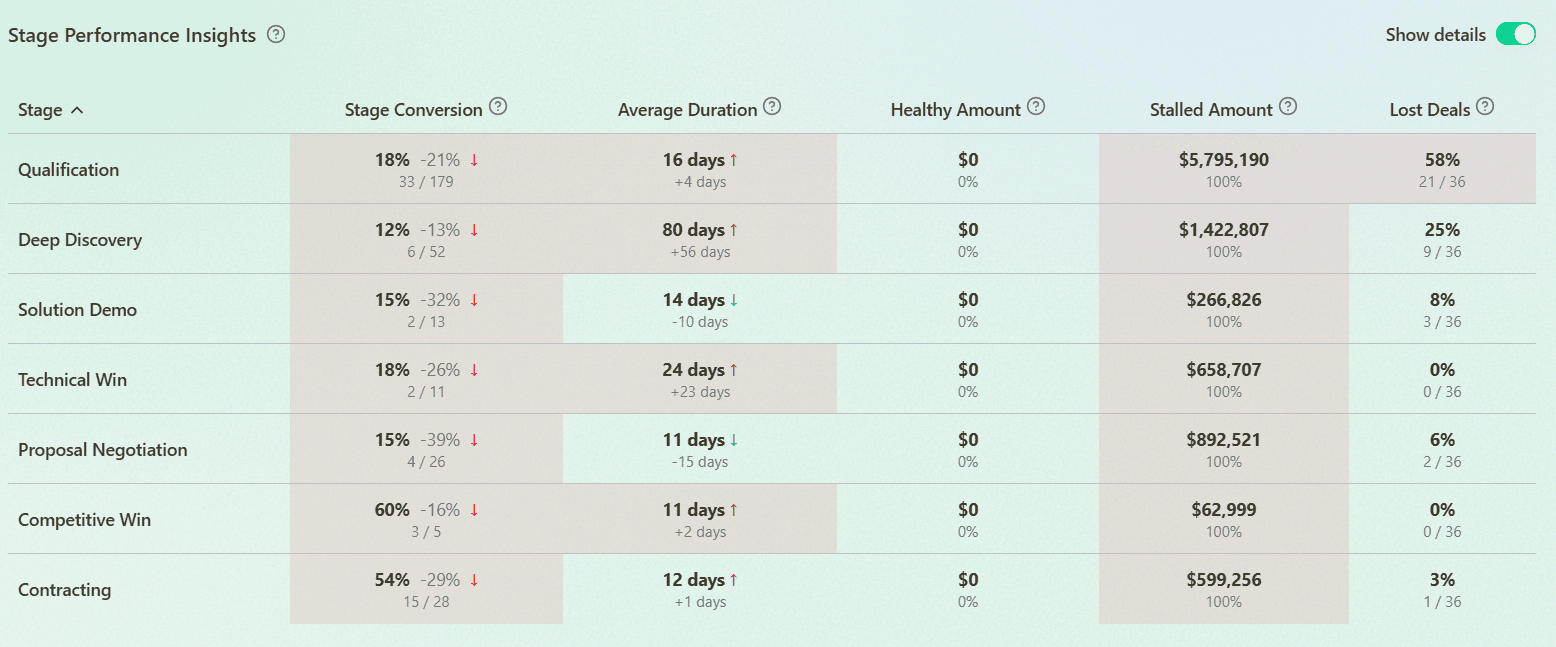
Detect Sales Process Bottlenecks
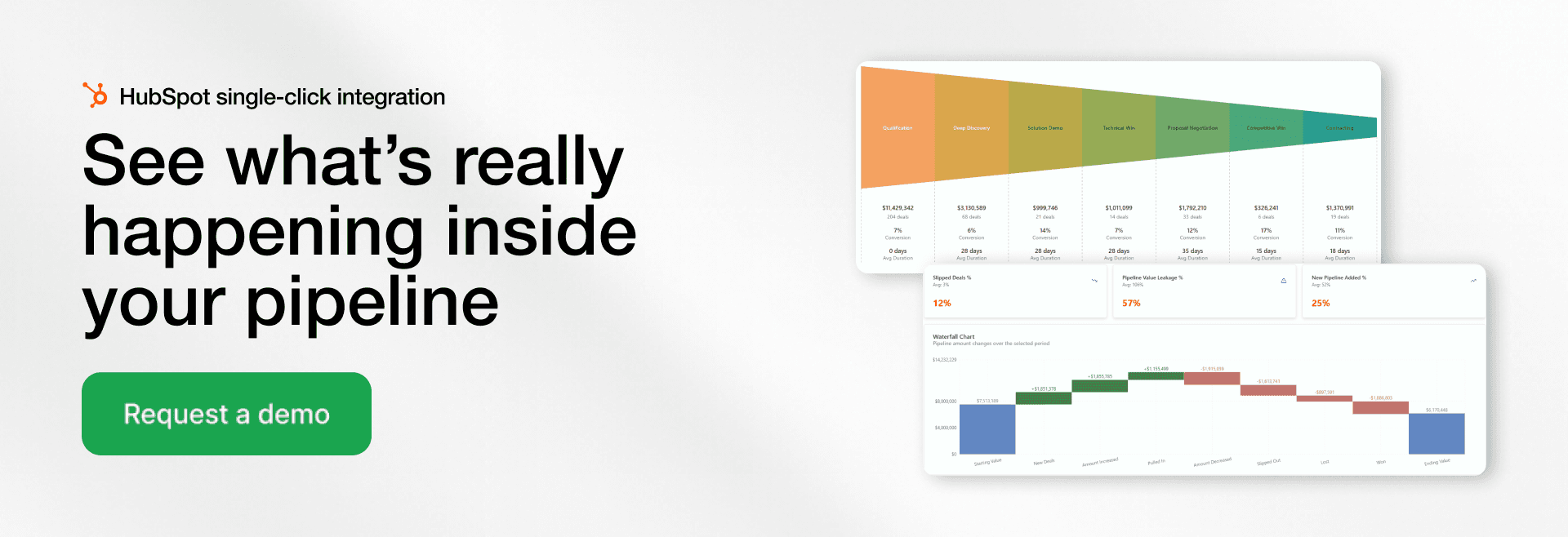
Forecastio continuously analyzes your sales pipeline and highlights where deals slow down, stall, or are consistently lost. This helps sales leaders identify bottlenecks early and improve the sales process before they impact revenue.
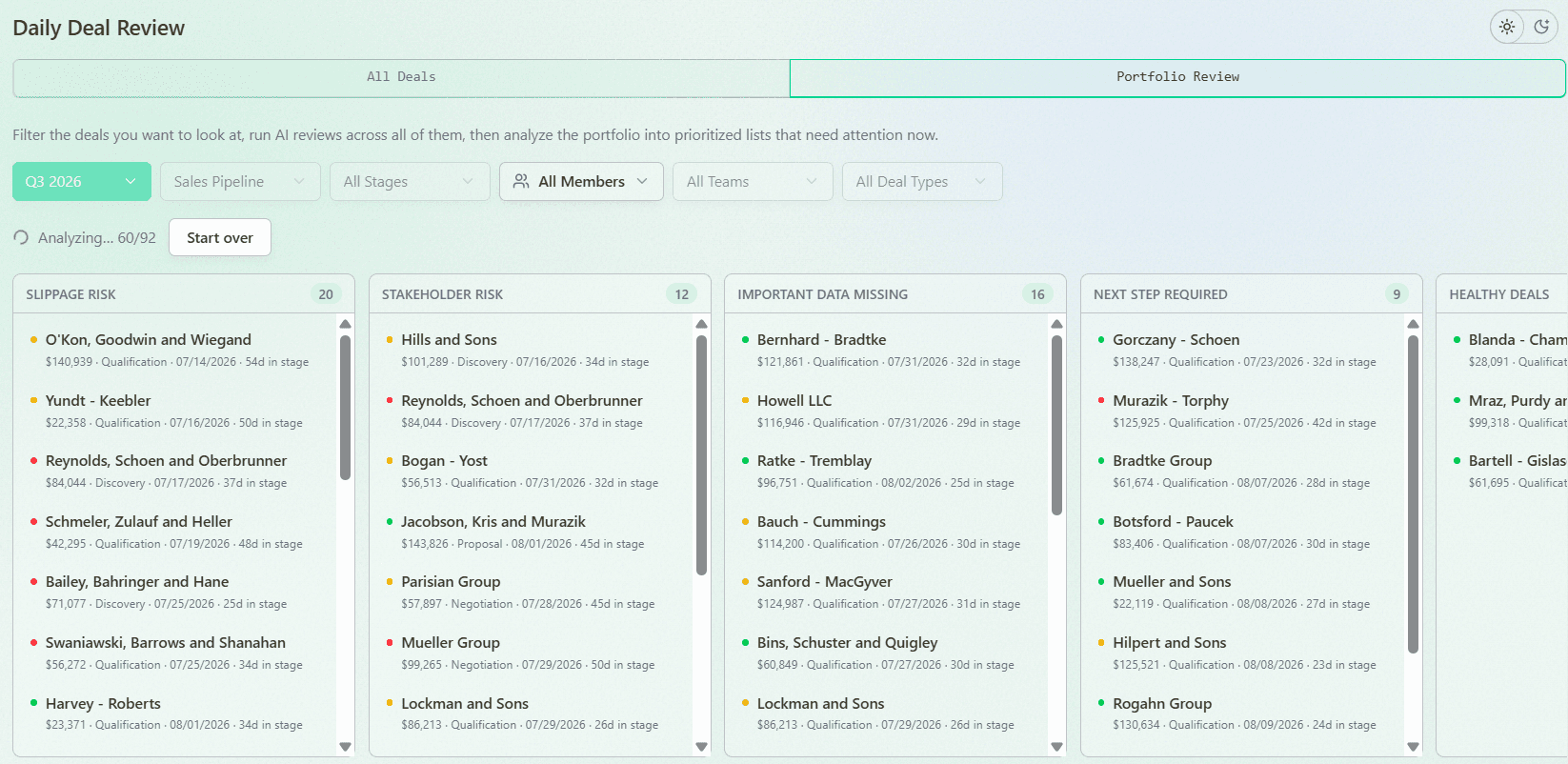
Prioritize the Right Deals
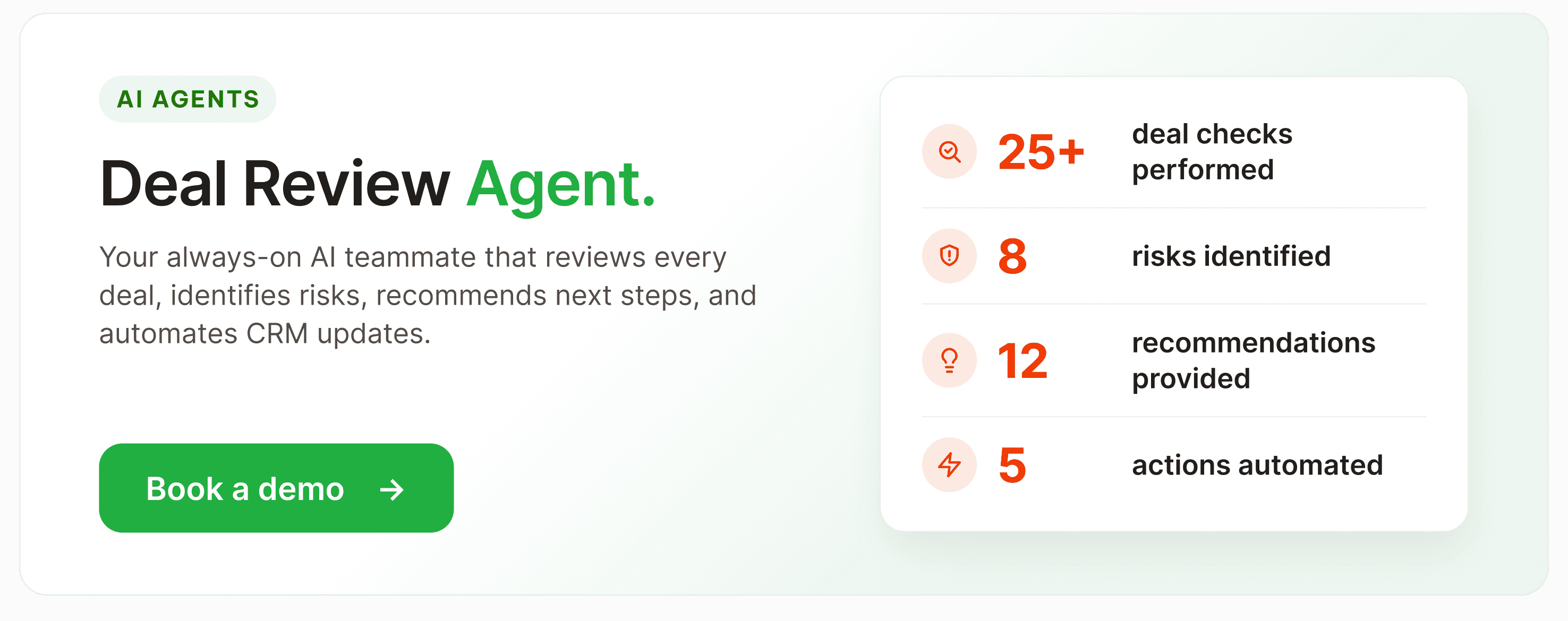
Not every opportunity deserves the same attention. The Deal Review Agent analyzes every deal and helps sales reps prioritize opportunities with the highest potential to close, while identifying deals that require immediate action.
Automated Deal Prioritization in Forecastio
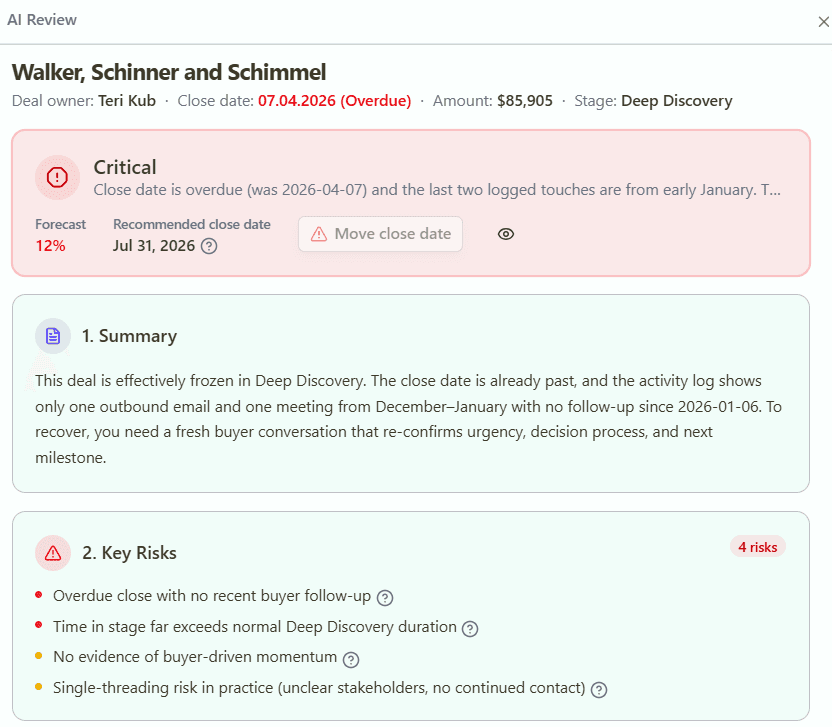
Identify Deal Risks and Next Best Actions
The Deal Review Agent automatically generates deal summaries, highlights potential risks, recommends next steps, and can even automate selected operational tasks. This allows sales reps to spend more time selling instead of manually reviewing their pipeline.
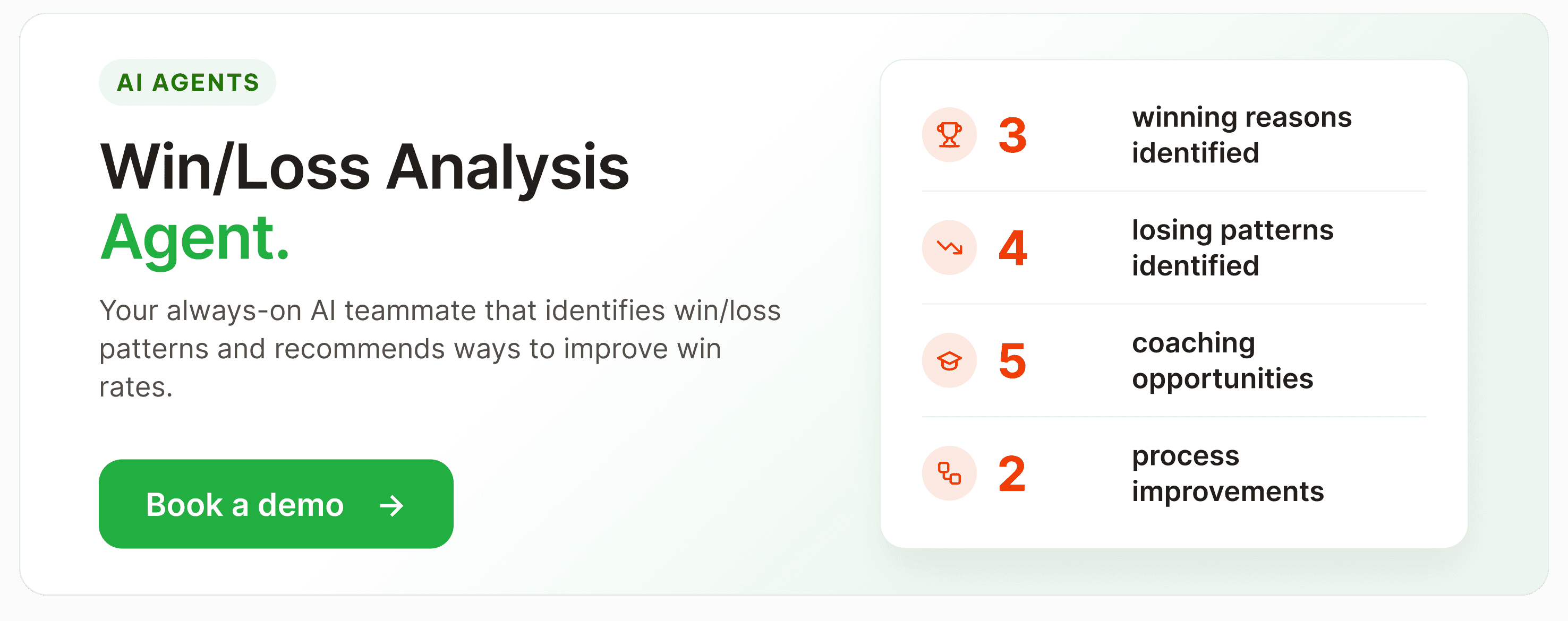
Learn Why Deals Are Won or Lost
The Win/Loss Analysis Agent analyzes historical B2B deals to identify recurring win/loss patterns, common objections, competitive threats, and the factors that most influence outcomes. These insights help improve qualification, messaging, and the overall sales process.
By combining AI, historical data, and continuous sales pipeline analysis, Forecastio helps sales teams make better decisions, improve deal execution, and increase their sales conversion rate over time.
FAQ
What is a sales conversion rate?
A sales conversion rate measures the percentage of qualified leads or sales opportunities that become paying customers. A higher conversion rate means your sales team is turning more prospects into customers without increasing the number of leads.
How do you calculate sales conversion rate?
Calculate your sales conversion rate by dividing the number of closed-won deals by the total number of qualified opportunities, then multiplying the result by 100.
Sales Conversion Rate = (Closed-Won Deals ÷ Qualified Opportunities) × 100
What is a good B2B sales conversion rate?
There is no universal benchmark because conversion rates vary by industry, deal size, sales cycle length, and lead quality. However, once a company has achieved a strong product-market fit and consistently generates well-qualified opportunities, a conversion rate from qualified opportunities to closed-won deals below 30% often indicates there is room for improvement in the sales process.
Rather than comparing yourself to industry averages, focus on identifying bottlenecks, tracking your own performance over time, and continuously improving your results.
What is the fastest way to increase sales conversion rate?
The quickest improvements usually come from better lead qualification, deeper discovery, faster follow-up, prioritizing the right opportunities, and identifying deal risks before they become lost opportunities. Consistently reviewing your sales pipeline and improving your sales process will have the greatest long-term impact.
Share: