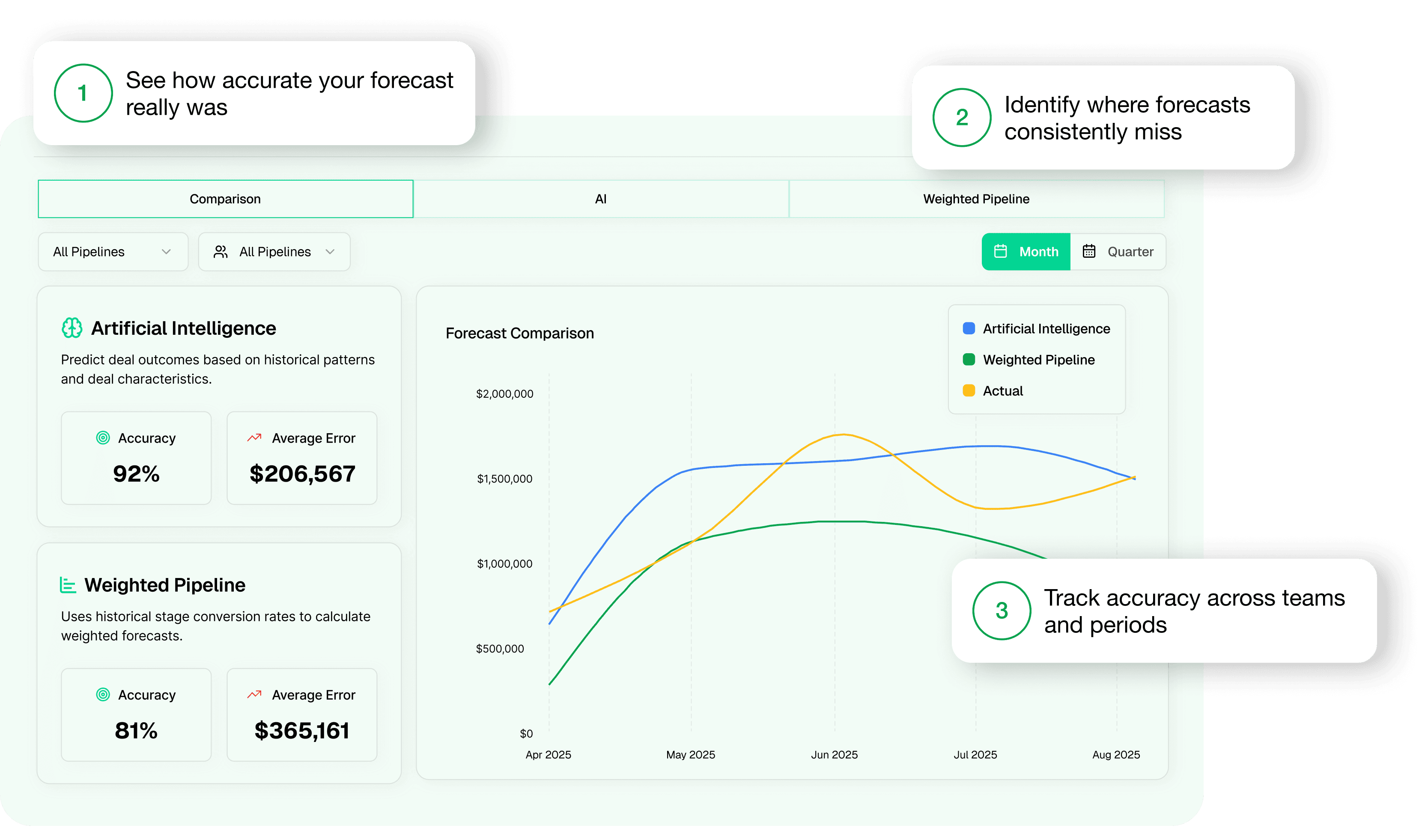
Forecastio continuously tracks how accurate your sales forecasts are. You see where forecasts were right, where they missed, and how accuracy changes by team, pipeline, and period
Why forecast accuracy is harder than it looks
Most teams look at forecast accuracy only after the quarter ends. By then, it is already too late to fix anything. Accuracy issues repeat quarter after quarter because teams do not track patterns, only outcomes
You only see results, not trends
A forecast was wrong, but you do not know if this is an isolated miss or a recurring pattern. Without historical accuracy tracking, it is impossible to tell whether forecasting is improving or getting worse
Accuracy is averaged and misleading
Many teams look at one overall accuracy number. This hides the real problems. One team, segment, or deal type may be highly inaccurate while others perform well
No feedback loop for improvement
Reps submit forecasts, leaders review them, and the cycle repeats. There is no structured feedback that shows where forecasts consistently overestimate or underestimate reality
Wrong accuracy formula is applied
Many teams rely on a single accuracy metric without considering how their business actually sells. Forecast accuracy should be measured differently depending on deal size, sales cycle length, volatility, and forecasting horizon
What is forecast accuracy tracking?
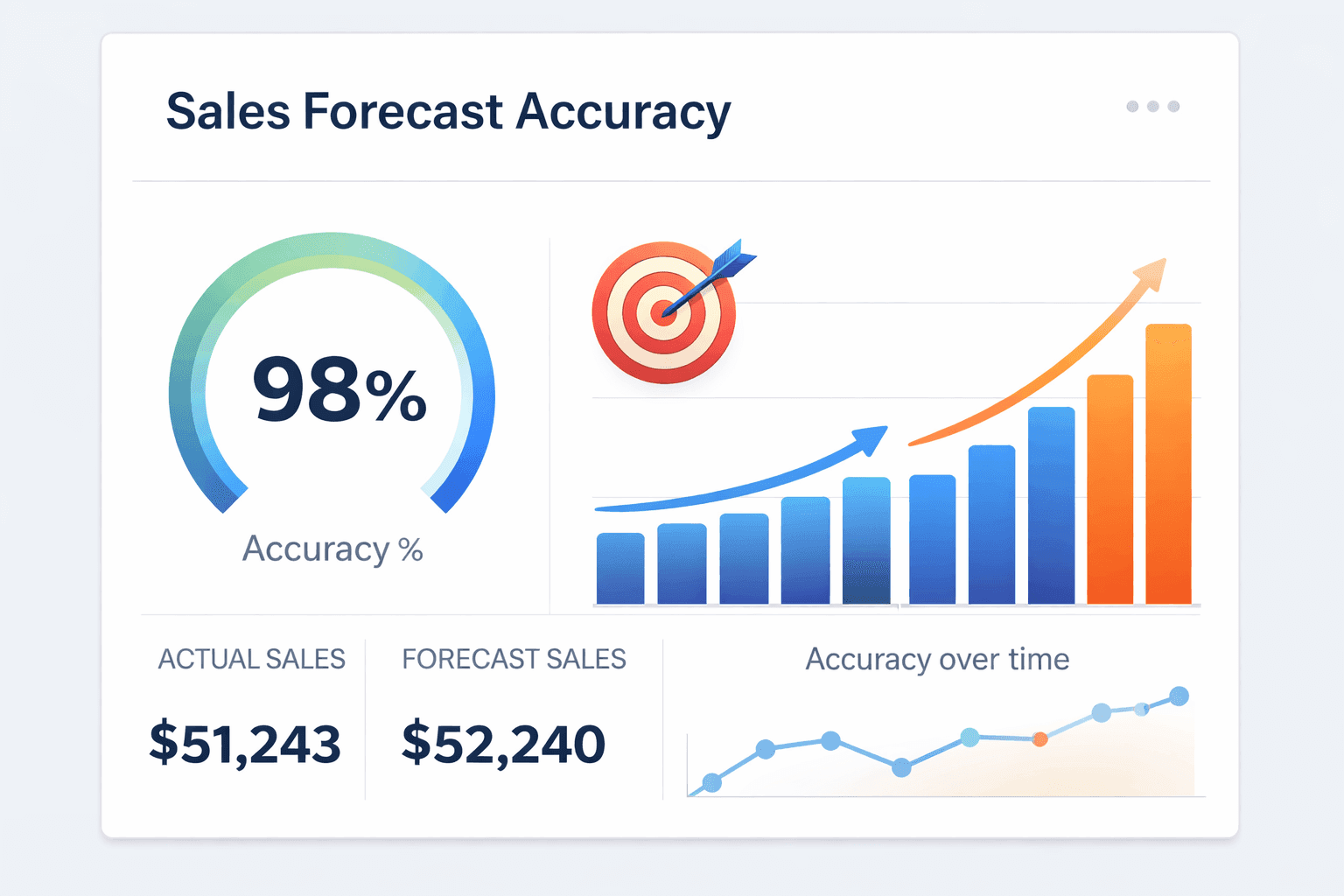
Forecast accuracy tracking measures how close your forecasts were to actual results and shows how accuracy evolves over time. Instead of checking accuracy once per quarter, you continuously monitor how reliable your forecasting process really is
Forecast accuracy tracking looks at:
Forecasted revenue vs actual revenue
Accuracy by month, quarter, and year
Accuracy by team, sales rep, or pipeline
Over-forecasting and under-forecasting patterns
Accuracy trends over time
As a result, you understand not only if your forecast was accurate, but why it was or was not.
Why forecast accuracy matters for your team

Continuous improvement instead of post-mortems
By tracking accuracy over time, you spot issues early and adjust your forecasting approach before the quarter is lost

More reliable planning and commitments
When you understand your accuracy patterns, you can make more confident hiring, budgeting, and revenue commitments

Better coaching and accountability
Accuracy tracking highlights where forecasting discipline breaks down. Leaders can coach teams and reps based on real data instead of assumptions
How forecast accuracy tracking works in Forecastio
Forecastio connects to your HubSpot account, generates forecasts based on your data, and starts tracking forecast accuracy from day one
1
We capture forecast snapshots over time
Forecastio stores historical forecasts without manual input. Each snapshot reflects the forecast at that moment, based on your HubSpot data.
2
We compare forecasted and actual results
Once a period closes, Forecastio compares forecasted revenue with actual closed revenue to calculate accuracy.

3
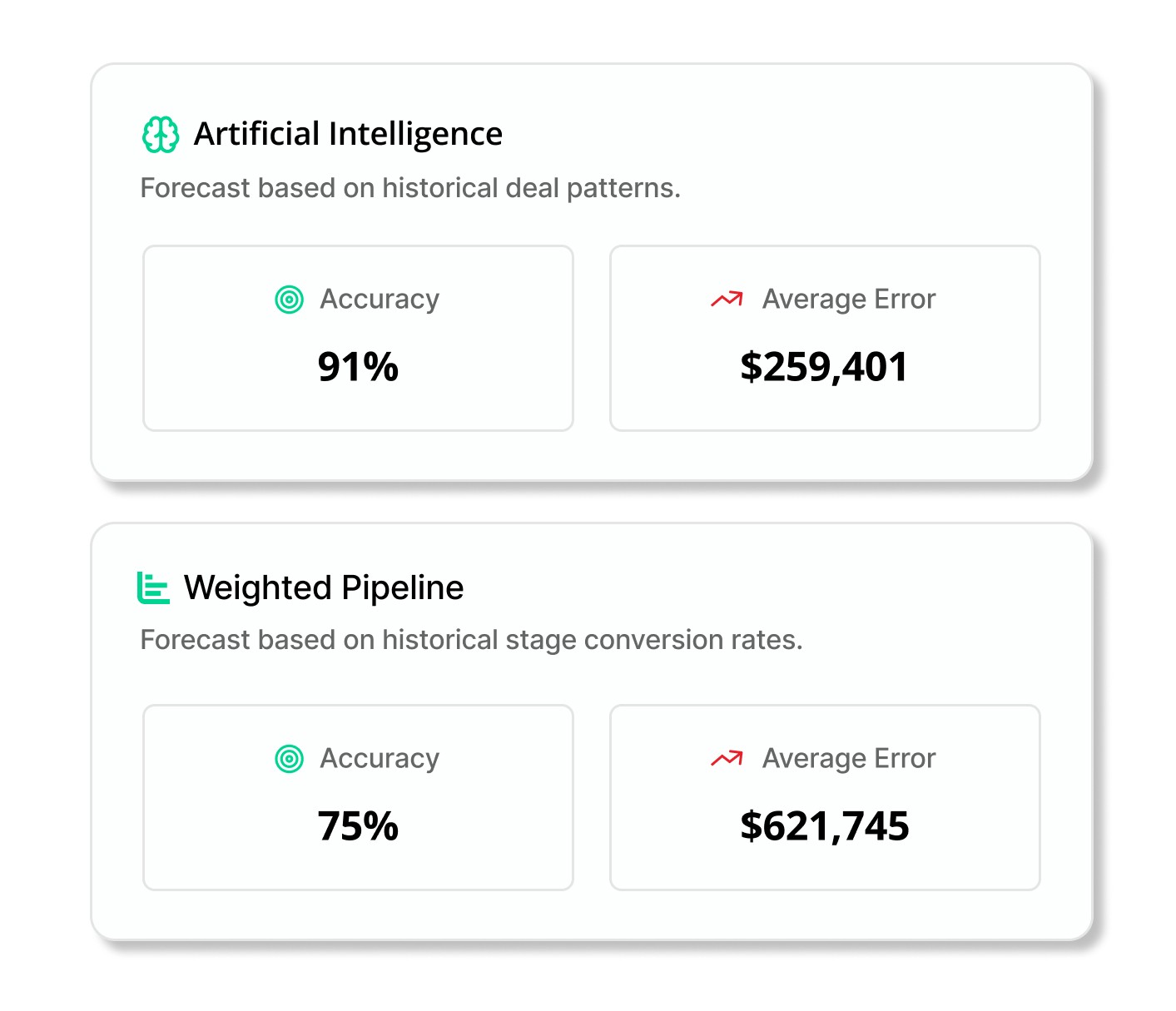
We compare accuracy by forecasting method
Forecastio lets you compare forecast accuracy across different forecasting methods. You can see which approaches perform better for your business and which ones consistently miss.
4
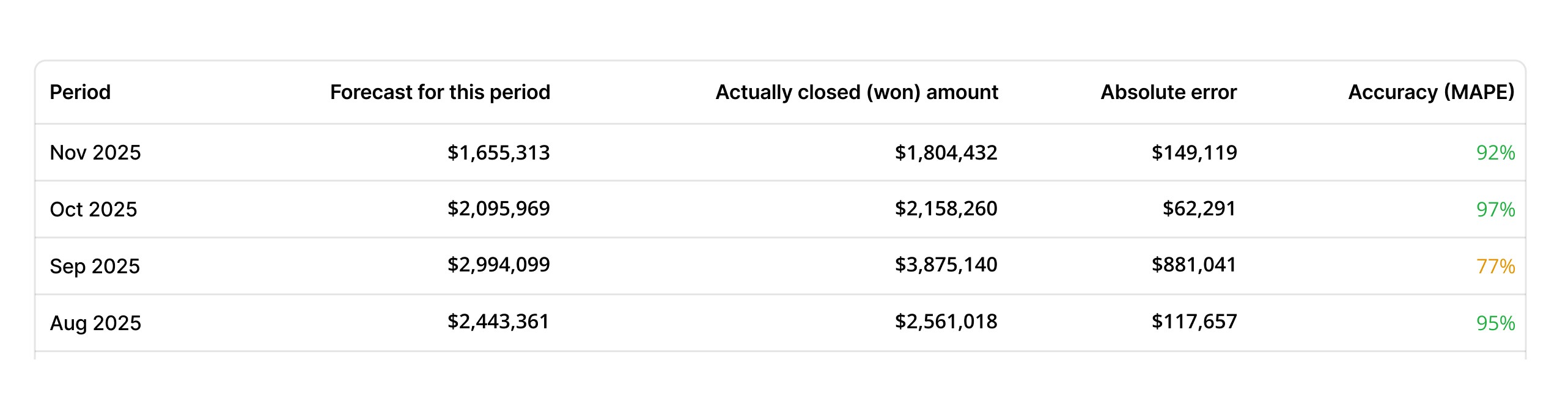
We analyze accuracy trends over time
Forecastio shows historical accuracy and error trends across periods and forecasting methods, helping you spot recurring issues and measure improvement.
Who benefits from forecast accuracy tracking
VP of Sales and CRO
Understand how reliable your forecasts really are and where forecasting discipline needs improvement before it impacts revenue commitments
RevOps and Sales Operations
Track accuracy trends, identify structural forecasting issues, and build a repeatable, data-driven forecasting process
Founders and CEOs
Gain confidence in revenue projections and understand forecasting risk without diving into CRM details
FAQ