Revenue Intelligence in 2026: The Complete Guide

Alex Zlotko
CEO at Forecastio
What is revenue intelligence?
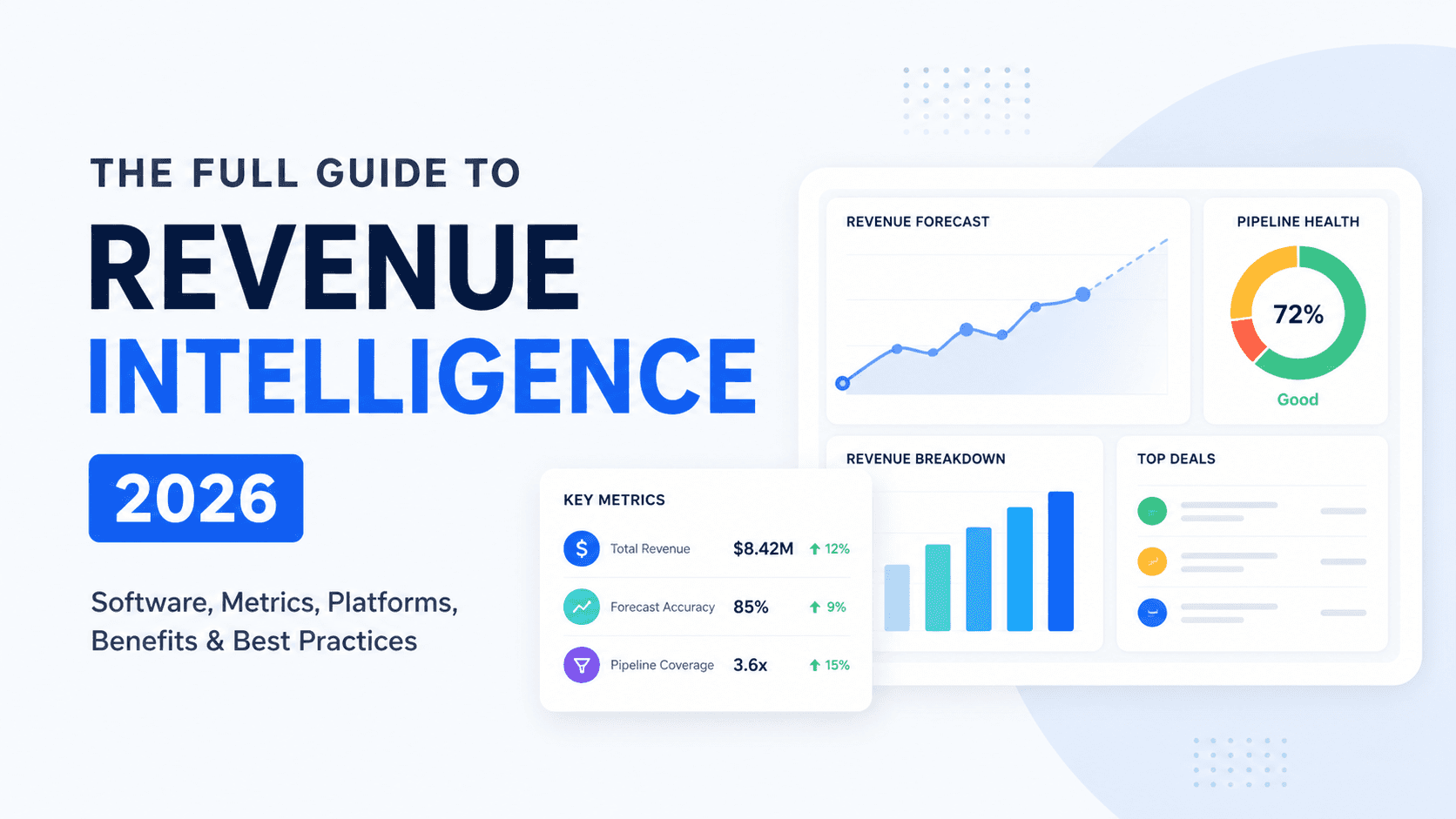
Revenue intelligence is the process of collecting and analyzing sales data, customer interactions, and pipeline information to improve decisions and predict outcomes. It combines data analytics, AI, and automation to give revenue teams a clearer view of what is really happening in the business.
In simple terms, revenue intelligence helps companies move from guessing to making data driven decisions. Instead of relying on manual reports or intuition, teams use real time data and actionable insights to improve performance and drive revenue growth.
From my experience working with sales leaders, most companies already have enough data. The problem is not data collection. The problem is how to analyze data and turn it into something useful.
At the core, revenue intelligence systems connect different sales data sources:
CRM data
Emails and sales conversations
Sales calls and meetings
Product usage and customer data
This creates a single source of truth across sales teams, customer success teams, and revenue operations.
Unlike traditional business intelligence, which focuses on static reports, revenue intelligence insights are dynamic. They help teams:
Identify trends in the sales pipeline
Understand customer behavior
Track deal health and risks
Improve forecasting accuracy
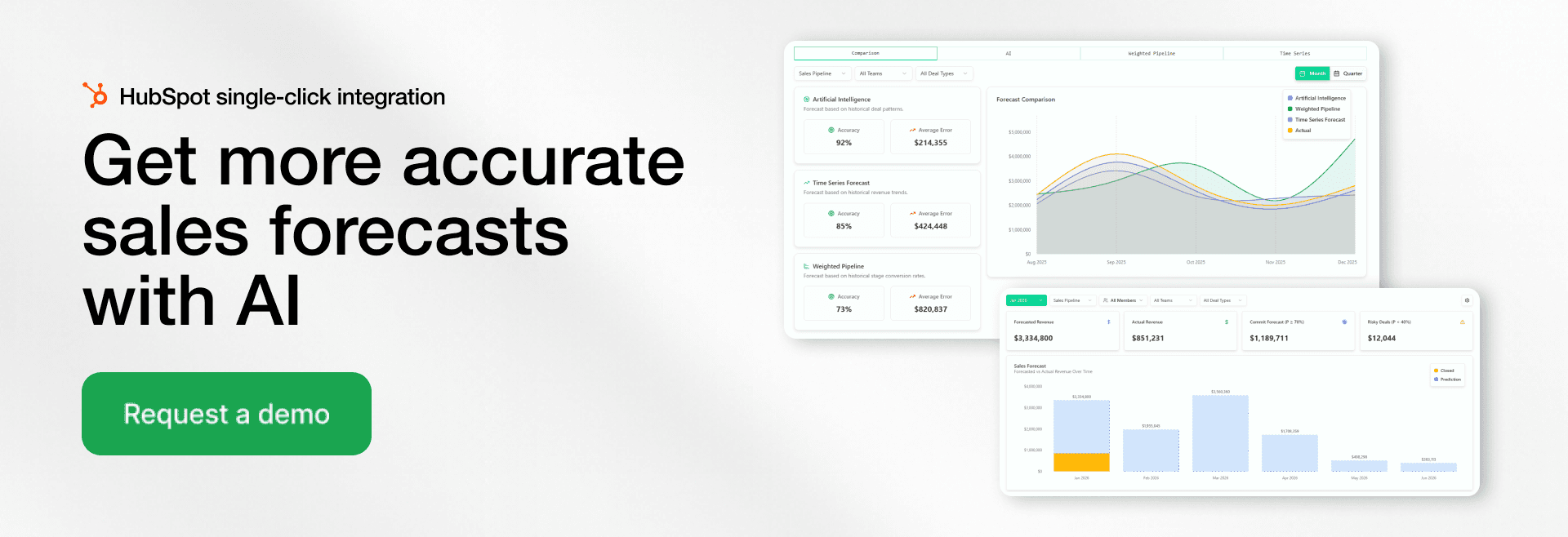
For example, platforms like Forecastio use predictive analytics and historical data to detect risky deals and build accurate sales forecasts. This is where sales intelligence evolves into something more practical and actionable.
What are the benefits of revenue intelligence?
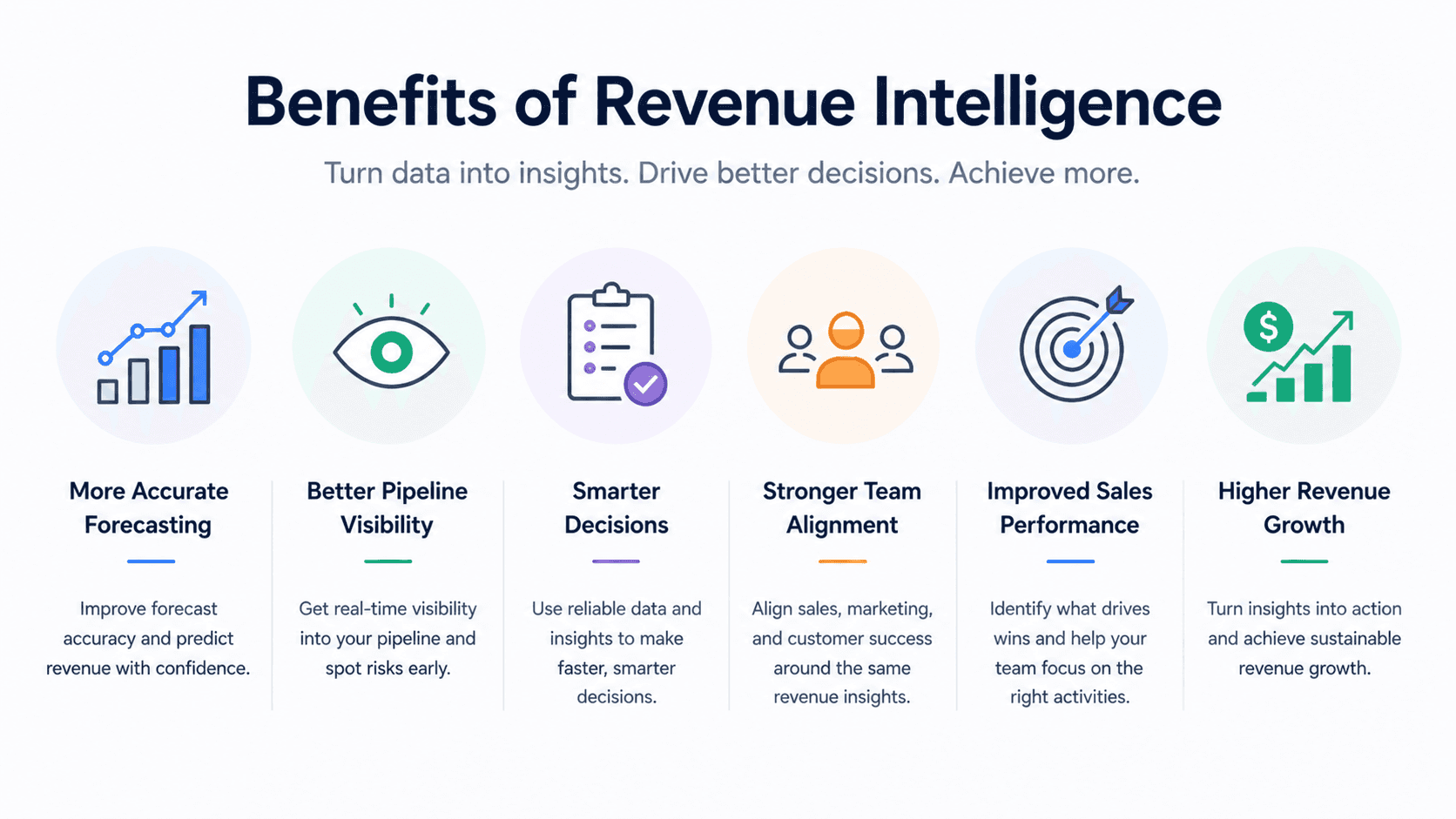
Revenue intelligence helps companies improve visibility, align teams, and make better decisions. It directly impacts sales performance, sales efficiency, and overall revenue growth.
In practice, I’ve seen that the biggest benefit is clarity. Teams stop arguing about numbers and start focusing on actions that maximize revenue.
Benefits for sales teams
For sales teams and sales reps, revenue intelligence tools provide:
Better visibility into the sales pipeline
Clear deal metrics and insights into deal health
Improved lead prioritization
More effective sales strategies
This helps reps focus on the right deals and reduce wasted effort.
Benefits for marketing teams
For marketing, sales and marketing tools powered by revenue intelligence help:
Understand which channels drive revenue generation
Track customer lifecycle performance
Align messaging with real customer preferences
Benefits for customer success teams
Customer success teams use revenue intelligence insights to:
Monitor customer health
Improve customer satisfaction
Identify upsell and expansion growth opportunities
Benefits for RevOps and leadership
For revenue operations, sales operations, and sales managers, the value is even higher:
Better pipeline management
More accurate forecast metrics
Stronger alignment across sales, marketing and CS
For sales leaders, it means:
Reliable sales forecasting
Faster decision-making
Better control over sales trends
According to Gartner, many sales leaders still do not trust their forecasts. This is exactly the gap revenue intelligence systems are designed to fix.
What are the core revenue intelligence metrics?
To make revenue intelligence useful, you need to track the right revenue intelligence metrics. These metrics go beyond basic reporting and help teams understand performance and risks.
The goal is simple. Measure what impacts revenue growth and improve forecasting accuracy.
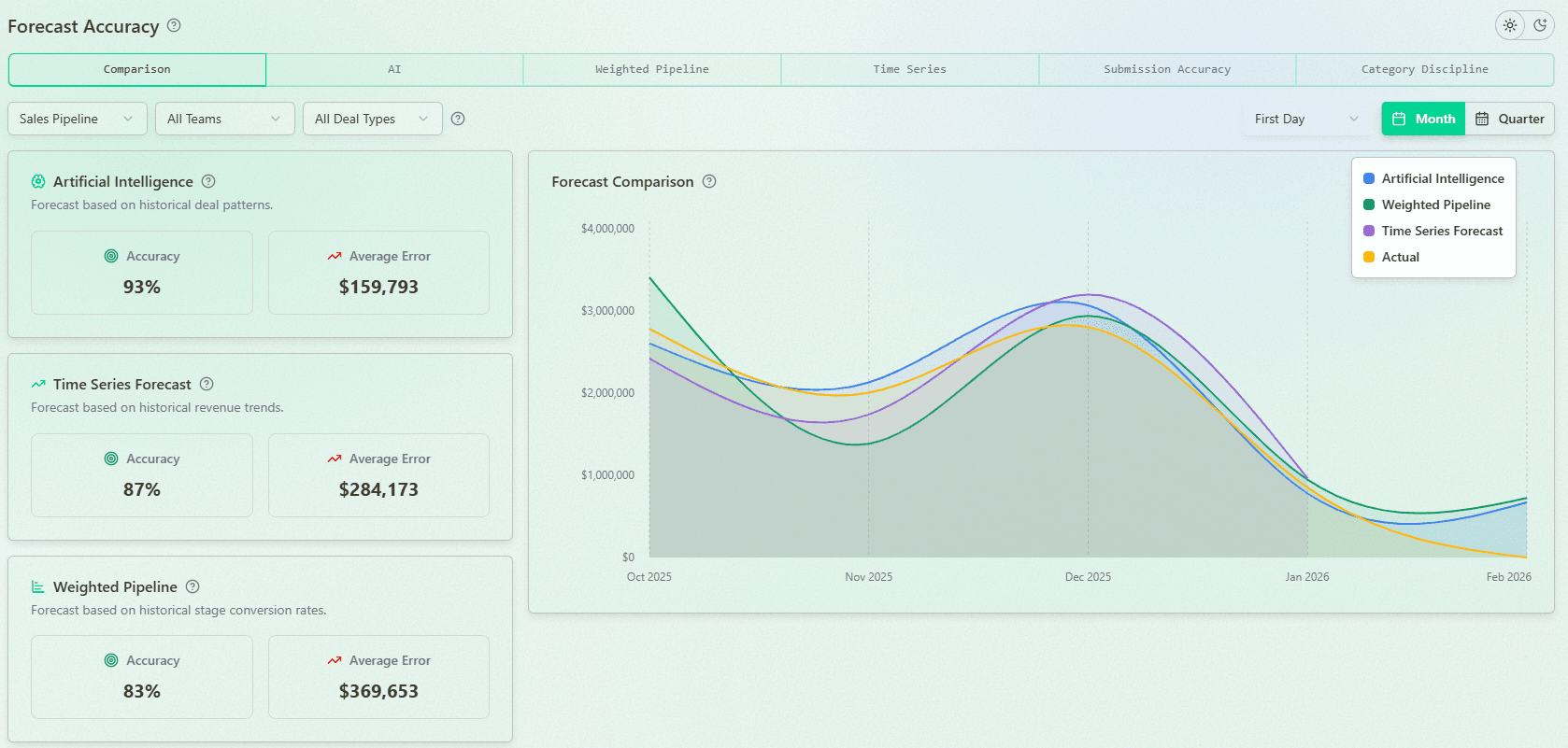
Forecast accuracy and forecast gap
Forecasting accuracy shows how close your predictions are to actual results. It is one of the most important forecast metrics for sales leaders.
Pipeline coverage and pipeline health
Sales pipeline coverage helps you understand if your sales pipeline is strong enough to hit targets. Pipeline health shows the quality of deals and overall deal health.
Conversion rates by stage
Tracking pipeline stage conversions helps analyze sales and identify bottlenecks in sales processes.
Deal velocity and sales cycle length
Sales cycle length and deal velocity show how fast deals move through the pipeline. These are critical for improving sales efficiency.
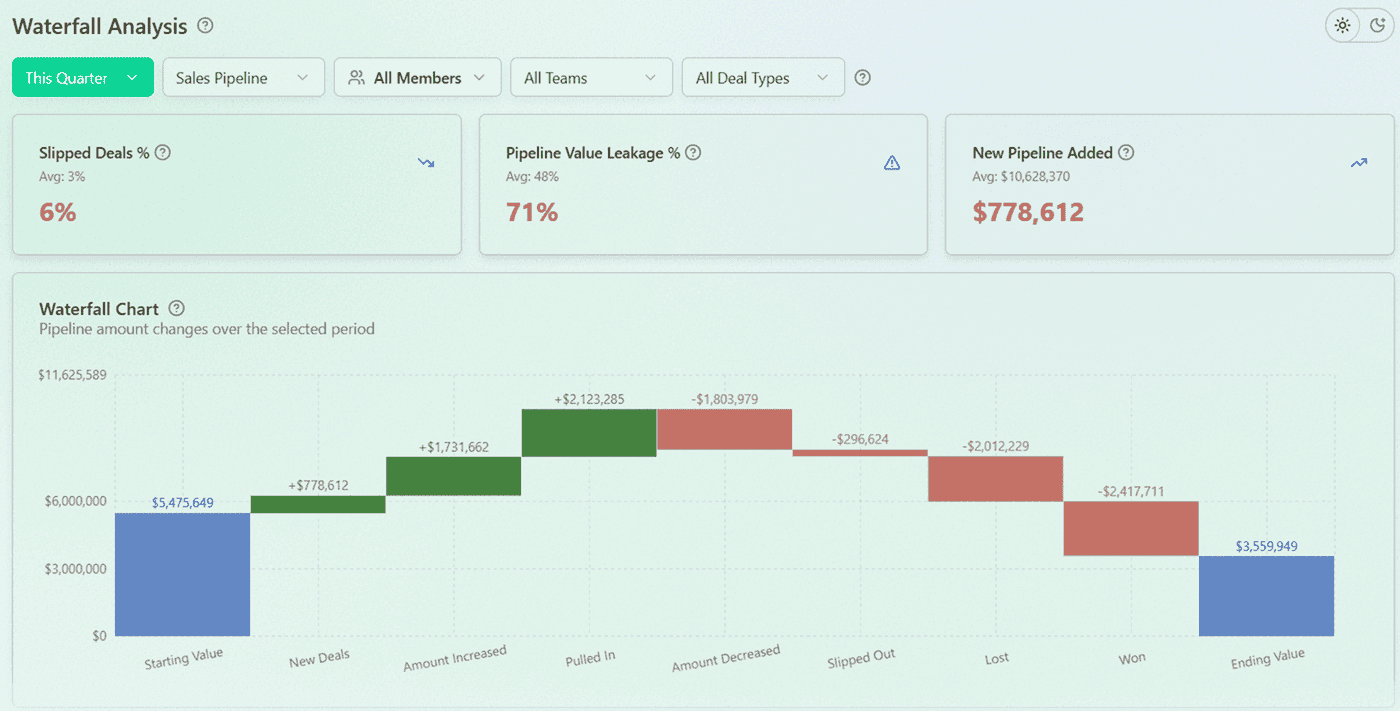
Slippage rate and revenue leakage
Slippage rate shows how often deals are delayed. Revenue leakage includes:
Lost deals
Decreased deal values
Slipped opportunities
Together, they highlight hidden risks in revenue generation.
Win rate and no-decision rate
Win rate tells you how effective your team is at closing deals. No-decision rate highlights deals that don’t move forward at all. In many cases, no-decision is a bigger problem than losses, as it points to issues in sales processes, qualification, or how well sales reps communicate value.
What is revenue Intelligence software?
Revenue intelligence software is a category of intelligence tools that collect, process, and analyze interaction data from multiple sources.
It is designed to replace manual reporting and fragmented systems with one platform that can integrate data and provide real time insights.
As the category has matured, vendors have expanded beyond traditional analytics to include sales forecasting, pipeline intelligence, deal intelligence, conversation intelligence, and AI agents. Modern revenue intelligence platforms vary significantly in their capabilities, implementation approach, and ideal use cases.
Key features of revenue intelligence software
Most revenue intelligence tools include:
AI-based predictive analytics
Automated data collection and data entry
Pipeline and deal metrics tracking
Deal health analysis and recommendations
Forecasting and advanced analytics
Integration with CRM and data sources
These tools connect with sales data sources such as:
CRM systems
Marketing tools
Communication platforms
They collect data and unify it into a single system.
Types of data analyzed
Typical data includes:
Sales interactions and sales conversations
Customer interactions and engagement
Customer feedback
Market trends
Role of AI and machine learning
AI helps:
Anticipate customer behavior
Detect risks in the sales pipeline
Build accurate sales forecasts
From what I’ve seen, the biggest value comes from turning raw customer data into clear actionable insights without manual work.
How revenue intelligence software can help
Revenue intelligence software helps companies turn raw sales data into clear decisions. It improves visibility, reduces manual work, and gives revenue teams the ability to act faster and with more confidence.
In my experience, the biggest shift happens when teams stop spending time on reports and start focusing on actions. That’s where real impact on revenue growth comes from.
Improve forecasting accuracy
One of the main reasons companies adopt revenue intelligence software is to improve forecasting accuracy. Instead of relying on gut feeling or static CRM reports, teams use historical data, predictive analytics, and real-time pipeline signals.
For example, AI models analyze:
Past deal outcomes
Real-time deal signals and health
Stage conversion patterns
Sales cycle length etc.
Identify risky deals and pipeline gaps
Most pipelines look healthy on the surface. The problem is hidden risks. Revenue intelligence insights help uncover them.
By analyzing deal health, activity levels, and customer interactions, teams can:
Detect stalled deals
Identify missing engagement
Find gaps in pipeline management
This is critical for avoiding surprises at the end of the quarter. This category of capability is often called deal intelligence - software purpose-built to catch deal-level risk early.In practice, even a small improvement in identifying risks can significantly impact revenue generation.
For the modern CFO, better visibility into pipeline health also improves forecasting accuracy and helps reduce unexpected gaps in financial performance.
Enhance sales performance
When teams have access to real time insights, they perform better. Managers can analyze sales performance at a deeper level and provide more targeted sales coaching.
Instead of generic feedback, they can:
Focus on specific deals
Identify weak points in sales processes
Improve execution across the team
This leads to stronger sales performance and better results across the board.
Reduce manual reporting
Many sales teams still spend hours updating spreadsheets and preparing reports. This creates delays and errors due to manual data entry.
Revenue intelligence tools automate:
Data collection from multiple sales data sources
Report generation
Tracking of key metrics
This saves time and allows sales reps and sales managers to focus on selling instead of reporting.
Align sales, marketing, and customer success
One of the biggest challenges in most companies is alignment. Different teams often work with different data and assumptions.
Revenue intelligence platforms create a single source of truth by combining:
CRM data
Marketing tools
customer success data
This helps:
Align sales, marketing, and customer success teams
Improve collaboration across revenue operations
Make faster and more consistent data driven decisions
When everyone works from the same numbers, execution becomes much more effective.
Examples of revenue intelligence platforms
A revenue intelligence platform is a system that combines data from multiple sales data sources, analyzes it using predictive analytics, and provides actionable insights to improve sales performance, forecasting accuracy, and overall revenue growth.
Unlike standalone revenue intelligence tools, platforms connect the full revenue workflow. They bring together sales teams, customer success teams, and revenue operations into a single environment with a shared single source of truth.
From my experience, the key value of a platform is not just dashboards. It’s the ability to analyze data, detect risks, and help teams make faster data driven decisions.
Below are some of the most well-known revenue intelligence platforms and where they fit best.
Forecastio
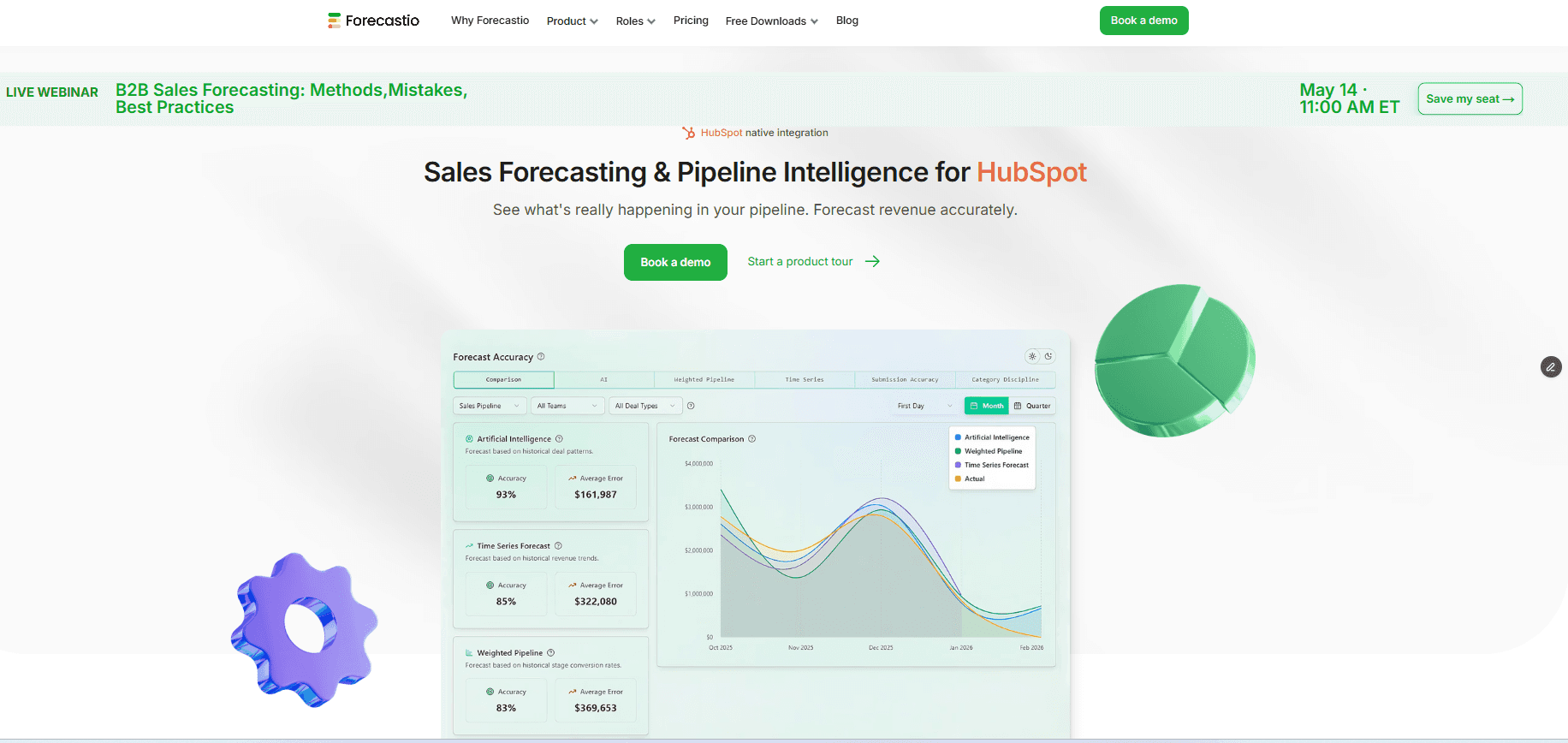
Forecastio focuses on forecasting and pipeline insights. It helps sales leaders and sales managers improve forecasting accuracy and track how forecasts change over time.
Best for:
Teams that want more accurate sales forecasts
Companies using HubSpot that need better forecasting
Revenue teams that want deeper pipeline management and deal health insights
Clari
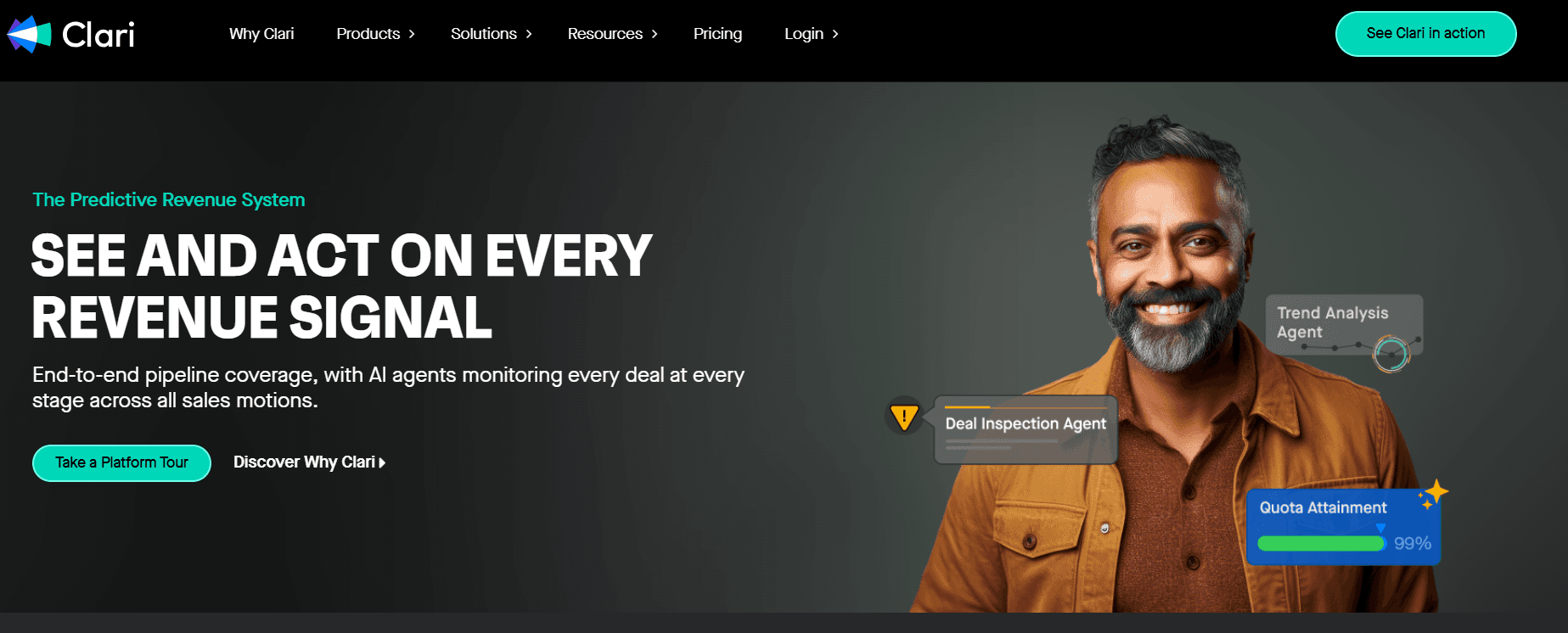
Clari is one of the most established revenue intelligence platforms. It provides a broad solution for pipeline inspection, forecasting, and revenue operations management.
Best for:
Mid-size and enterprise companies
Teams focused on revenue generation and forecasting at scale
Organizations with complex sales processes
Gong
Gong is known for analyzing sales conversations and customer interactions. It focuses heavily on sales intelligence and coaching.
Best for:
Teams that want to improve sales calls and sales interactions
Companies focused on sales coaching and understanding customer behavior
Organizations looking to extract insights from interaction data
InsightSquared
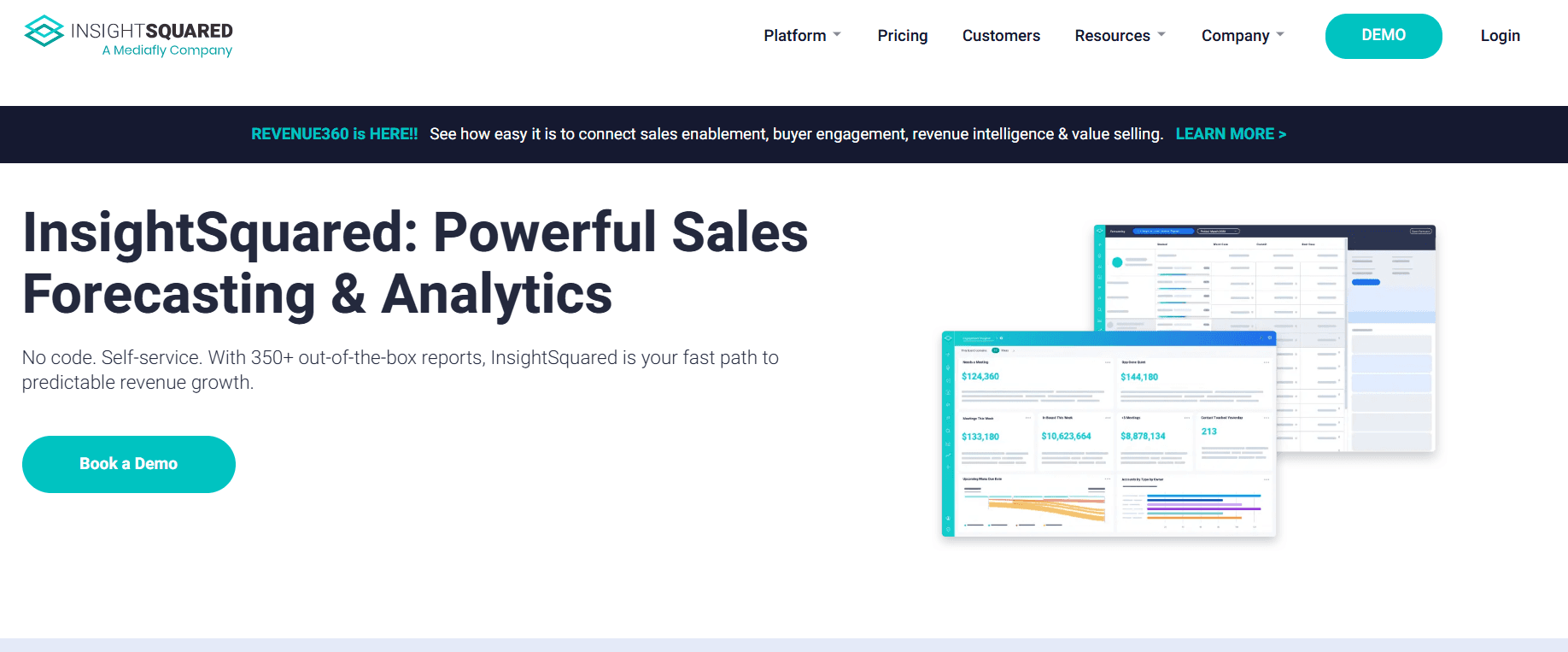
InsightSquared focuses on data analytics and reporting. It helps teams track revenue metrics, analyze performance, and improve visibility.
Best for:
Companies that need strong business intelligence and reporting
Teams that want to analyze sales data deeply
Organizations focused on sales trends and historical analysis
Weflow
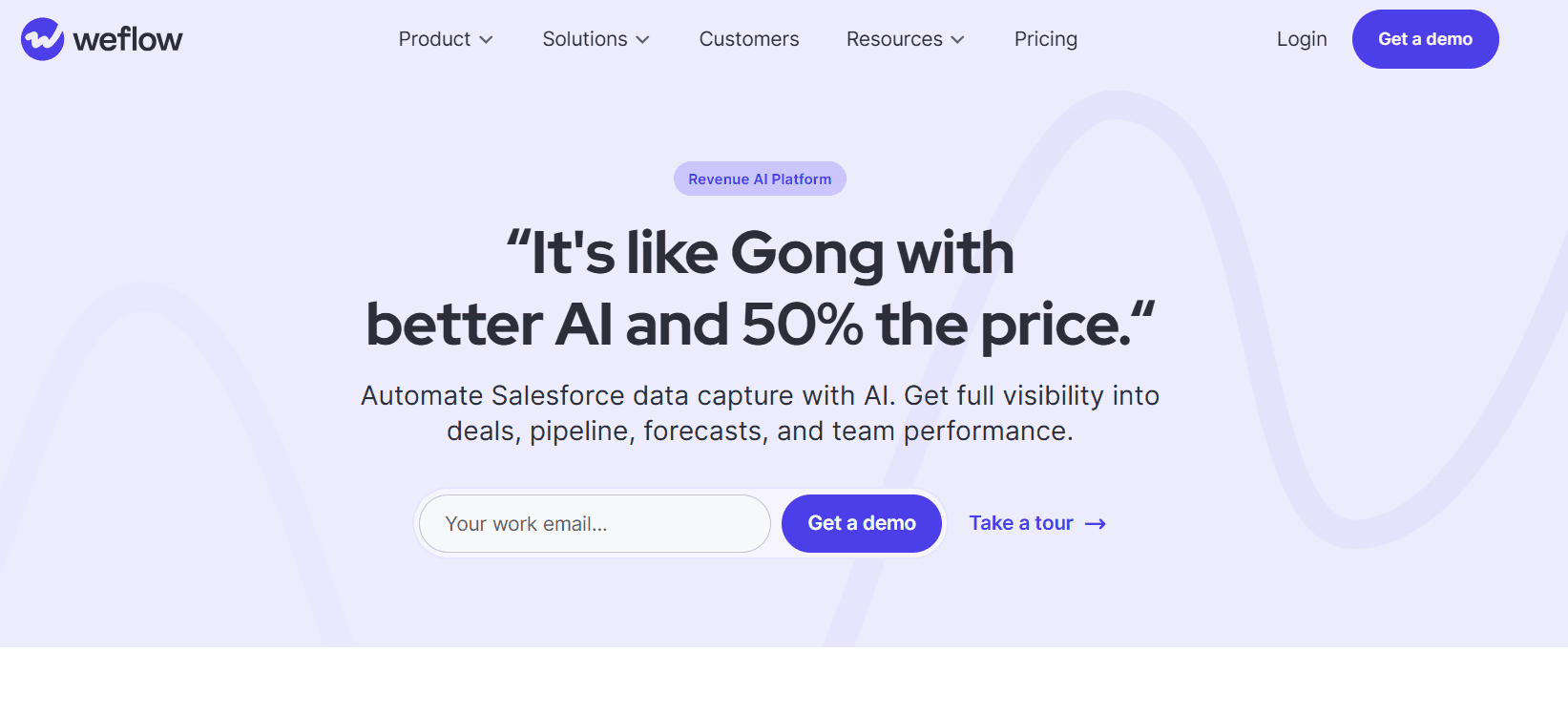
Weflow focuses on CRM data quality and workflow automation. It helps reduce manual data entry and improve pipeline accuracy.
Best for:
Teams struggling with CRM hygiene
Organizations that want better sales operations workflows
Companies looking to improve sales efficiency and data quality
Revenue intelligence platforms comparison
Here is a brief comparison of popular revenue intelligence platforms
Platform | Core Focus | Key Strengths | Best For |
|---|---|---|---|
Forecastio | Forecasting & pipeline insights | High forecasting accuracy, strong deal health insights, clear forecast tracking over time | Teams using HubSpot, sales leaders and RevOps teams focused on accurate sales forecasts and pipeline management |
Clari | End-to-end revenue platform | Full revenue operations coverage, strong forecasting, enterprise-grade analytics | Mid-size and enterprise revenue teams with complex sales processes |
Gong | Conversation intelligence | Deep analysis of sales conversations, strong sales coaching, rich interaction data | Teams focused on improving sales calls, customer interactions, and coaching |
InsightSquared | Analytics & reporting | Advanced data analytics, strong dashboards, detailed revenue metrics tracking | Companies that want deeper business intelligence and sales trends analysis |
Weflow | CRM data & workflow automation | Reduces manual data entry, improves CRM accuracy, supports sales operations | Teams struggling with CRM hygiene and looking to improve sales efficiency |
The future of revenue intelligence
Revenue intelligence is moving from reporting and dashboards to automation and decision-making. The next phase is not about more data. It’s about using AI to take action based on that data.
From what I’ve seen, companies are shifting from just analyzing sales data to systems that actively help revenue teams make better decisions and drive revenue growth.
Below are the key trends shaping the future.
AI agents for revenue teams
AI agents are one of the most important trends. Instead of just showing revenue intelligence insights, systems will start acting on them.
Examples:
Forecast accuracy agent – improves forecasting accuracy and accurate sales forecasts
Pipeline health agent – prioritizes risks in the sales pipeline and deal health
Deal execution agent – suggests actions based on sales conversations and interaction data
Slippage and leakage agent – reduces losses in revenue generation and pipeline management
Forecast operator (manager agent) – structures forecast process for sales leaders and revenue operations
This goes beyond traditional revenue intelligence tools. It moves into execution support.
Predictive and prescriptive analytics
Most tools today focus on predictive analytics, meaning they forecast what is likely to happen.
The next step is prescriptive analytics. This means:
Not just predicting outcomes
But recommending actions to improve them
For example:
Which deals to prioritize
How to improve forecasting accuracy
What changes will maximize revenue
This will significantly improve accurate sales forecasts and planning.
Real-time data and automation
Another key shift is towards real time data and automation. Instead of waiting for weekly reports, teams will rely on real time insights.
This helps:
Detect changes in deal health instantly
React faster to sales trends
Reduce manual data entry and reporting
Platforms like Forecastio are already moving in this direction by providing continuous updates on pipeline and forecasts.
Deeper analysis of customer interactions
Future revenue intelligence systems will rely even more on interaction data from:
Sales calls
Emails and sales conversations
Product usage and customer feedback
This will improve the ability to:
Anticipate customer behavior
Understand customer preferences
Strengthen customer relationships
Unified revenue platforms
We will also see a shift toward fully unified revenue intelligence platforms.
These platforms will:
Combine sales operations, marketing, and customer success
Provide a true single source of truth
Replace multiple disconnected sales and marketing tools
This will improve alignment and help teams make faster data driven decisions.
Final thought
The future of revenue intelligence is not about more dashboards. It’s about systems that help teams act faster and smarter.
Companies that adopt these approaches early will have a clear advantage in sales performance, pipeline management, and overall revenue generation.
FAQ
How much does revenue intelligence software cost?
The cost of revenue intelligence software depends on the features, company size, and level of analytics. Basic tools can start from a few hundred dollars per month, while advanced revenue intelligence platforms for larger revenue teams can cost several thousand dollars monthly. Pricing is often based on the number of users and data volume. In most cases, companies pay more for better forecasting accuracy, automation, and deeper sales data analysis.
What are the best revenue intelligence platforms?
Some of the most popular revenue intelligence platforms include Forecastio, Clari, Gong, InsightSquared, and Weflow. Each platform focuses on different areas, such as sales forecasting, data analytics, or customer interactions. When choosing a platform, it is important to consider your team size, data quality, and key use cases. The goal is to find a solution that improves sales performance and supports your revenue operations.
What is the meaning of revenue intelligence?
Revenue intelligence is the process of collecting and analyzing sales data, customer interactions, and pipeline information to improve decisions and drive revenue growth. It uses data analytics, AI, and automation to turn raw data into actionable insights. The goal is to help marketing teams, sales teams, customer success teams, and revenue operations make better decisions based on real data.
Share: